
Living in Puyallup means enjoying green landscapes, tall trees, and fresh air. It also means dealing with frequent moisture. For homeowners with outdoor decks, damp conditions often lead to moss growth. Moss makes surfaces slippery, holds moisture against the wood, and shortens the life of a deck.
Choosing the right materials from the start plays a major role in keeping moss under control. Many homeowners searching for a deck builder in Puyallup want guidance on materials that perform well in local conditions.
Why Moss Grows on Decks in Puyallup
Puyallup’s climate includes steady rain, shade from trees, and cool temperatures. These conditions allow moisture to linger on outdoor surfaces. Moss thrives when water sits on a deck for long periods, especially in shaded areas with limited airflow.
Traditional wood decks are more likely to support moss because wood absorbs water. When moisture remains trapped, spores settle in and spread quickly. Material choice, surface texture, and drainage all influence how easily moss develops.
How Deck Material Affects Moss Growth
Decking materials handle moisture differently. Some dry faster, absorb less water, or give moss less surface to cling to. A deck builder in Puyallup often prioritizes how materials perform in wet conditions rather than looks alone.
Pressure-Treated Wood
Pressure-treated lumber is common because it is affordable and easy to find. It resists rot and insects, but it still absorbs moisture. Without regular washing and sealing, moss can appear within a few seasons. This option suits homeowners willing to keep up with ongoing maintenance.
Cedar and Natural Softwoods
Cedar resists decay better than many woods and dries faster than pressure-treated lumber. Even so, moss can still develop, especially in shaded areas. Routine cleaning is needed to slow growth, though it cannot prevent it entirely.
Composite Decking and Moss Resistance
Composite decking is one of the most popular choices for homeowners focused on long-term performance. Many searching for a deck builder in Puyallup ask about composite options due to their durability in wet climates.
Why Composite Decking Performs Well
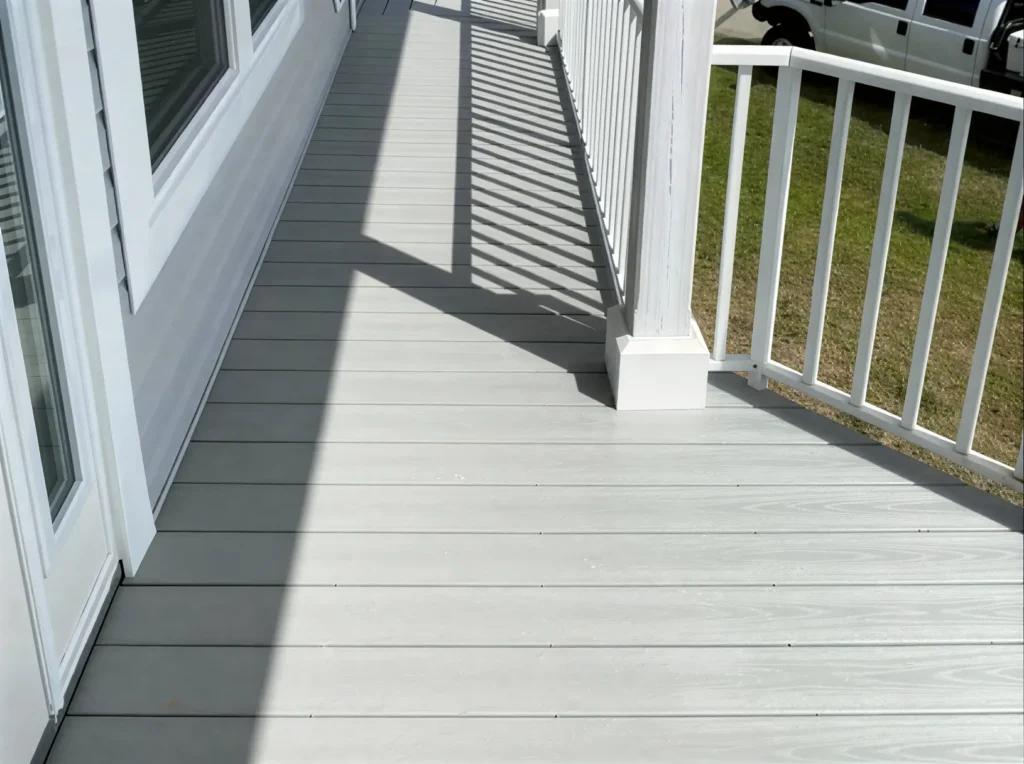
Composite boards are manufactured using a mixture of recycled plastic and wood fibers. They absorb far less moisture than natural wood. This makes it harder for moss to take hold.
Most composite decking has a capped surface that resists staining and water penetration. Rain tends to bead and run off instead of soaking in. While moss can still appear on the surface in heavily shaded areas, it is easier to clean and less likely to cause damage.
Surface Texture Matters
Smooth or lightly textured composite boards resist moss better than deeply grooved designs. Deep grooves trap debris and moisture, creating a better environment for growth. When choosing composite decking, surface design should be part of the decision.
PVC and Synthetic Decking Options
PVC decking contains no wood fibers at all. This makes it one of the most moss-resistant materials available.
Benefits of PVC Decking
PVC boards do not absorb water. They dry quickly and offer little grip for moss. These boards are also lighter than composite decking and resist fading and staining.
For homes surrounded by trees or located in shaded areas, PVC decking often provides the lowest maintenance option. Cost is typically higher, but long-term upkeep is minimal.
Design Choices That Reduce Moss Growth
Material choice is important, but deck design also affects moss buildup. A skilled deck builder in Puyallup considers how water moves across and away from the deck.
Proper Drainage and Spacing
Adequate spacing between boards allows water to drain instead of pooling. Poor spacing traps moisture and debris, increasing moss growth regardless of material.
Decks built too close to the ground also stay damp longer. Elevation improves airflow and helps surfaces dry faster after rain.
Sunlight and Shade Planning
Decks placed under dense tree cover are more prone to moss. Trimming overhanging branches and planning deck orientation can make a noticeable difference over time.
Maintenance Still Plays a Role
Even the best materials benefit from basic care. Occasional cleaning removes dirt and organic debris that moss feeds on. Gentle washing once or twice a year helps keep surfaces safe and attractive.
Avoid harsh chemicals or high-pressure washing, which can damage decking surfaces and shorten their lifespan.
Choosing the Right Deck Material for Your Home
Every home is different. Budget, yard conditions, sun exposure, and personal preferences all factor into material selection. Working with an experienced deck builder in Puyallup helps ensure that choices align with local climate demands.
Further Reading:
- Puyallup Home Additions: What to Expect During Construction
- Federal Way Guide: Adding Home Space Before Holidays
Ready to Build a Moss-Resistant Deck in Puyallup?
A deck should add enjoyment, not constant maintenance concerns. Selecting materials designed for wet conditions reduces moss growth and extends the life of your outdoor space.
For homeowners planning a new deck or replacement, Top Rung Construction offers professional deck design and construction services focused on durability and performance.
If you are searching for a reliable deck builder in Puyallup, contact us to discuss material options and build a deck that stays safer and cleaner throughout the year.