
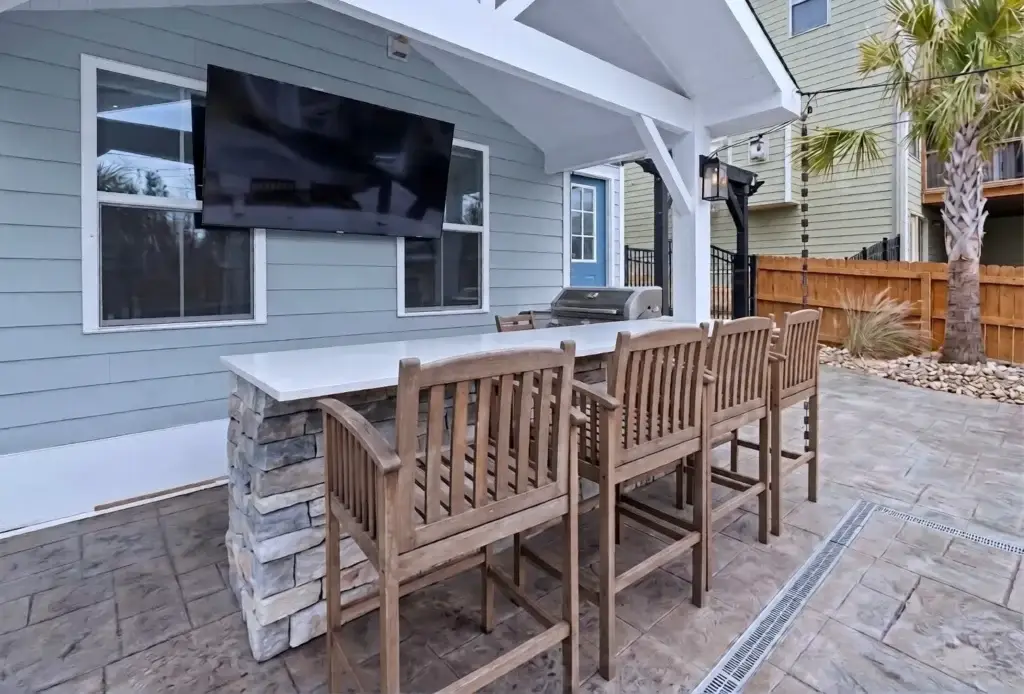
Washington weather can turn poorly drained, flat backyards into muddy swamps. When heavy rain hits, poorly built hardscapes can trap standing water and direct runoff toward the house. Fixing a soggy yard requires moving water away from the foundation before it causes damage. That’s why property owners hire experienced outdoor patio contractors to build surfaces that drain properly.
How Do Builders Keep Patios From Flooding in the Rain?
Professional patio contractors reduce water pooling during heavy fall rains by grading patio surfaces at a 1–2% slope away from home foundations and installing properly graded and compacted crushed-rock bases, with permeable systems where site conditions allow. Handling Pierce County downpours requires building a system that manages water both above and below the ground.
Paver Drainage Matrix
Stopping a flood requires multiple layers of defense working together. This breakdown shows how builders structure the ground to move water efficiently off the surface.
| Drainage Layer | How It Prevents Flooding |
| 1–2% Sloped Ground | Directs surface water downhill and away from the home foundation. |
| Compacted Crushed-Rock Base | Creates a stable, well-draining layer that stores and moves runoff. |
| Permeable Paver Joints | Allows some rainfall to enter the open-graded base and reduces surface pooling. |
Why Custom Patio Construction Starts Underground
People look at a beautiful stone layout and assume the work happens on the surface. In reality, the most critical part of custom patio construction happens completely underground. Local clay-heavy soil can drain slowly and retain water near the surface. If a crew simply drops stone blocks directly onto the dirt, the ground turns to mud, and the blocks sink unevenly.
A lasting build requires excavating unstable or unsuitable soil to the depth needed for the base. Builders replace that material with properly graded, compacted crushed rock. This rock base creates a stable, well-draining layer below the surface. When heavy rain hits, water enters the base, where it can infiltrate gradually or move to a designed drainage outlet.
The Mechanics of a Sloped Paver Patio
Even with a deep rock base, no surface handles a massive storm well if it sits perfectly flat. A solid paver patio must tilt slightly to guide water exactly where it needs to go. Builders commonly aim for a 1–2% slope, or approximately 1/8 to 1/4 inch per foot, away from the house. This subtle slope directs surface runoff toward the yard or another approved discharge point.
Getting this pitch wrong can have serious consequences. If the ground slopes backward toward the house, large volumes of runoff can collect against the foundation walls. That water increases the risk of seepage into the crawlspace or basement. A skilled crew uses laser levels throughout the build to ensure water flows away safely.
Joint Sand and Permeable Surface Drainage
The final step involves locking the individual stones together without sealing the surface shut. Loose joint sand can migrate during heavy rain if the joints are not properly compacted and maintained. Builders typically use a specialized polymeric sand that hardens to stabilize the joints while accommodating normal minor movement. This keeps the stones locked tightly in place while handling seasonal temperature changes.
For yards that experience heavy flooding, crews might upgrade to a fully permeable system. These setups use wider gaps filled with small gravel instead of hardening sand. Rainwater enters the open joints and moves into the properly designed rock base below. This design greatly reduces surface ponding and helps the space become usable soon after a storm.
Related Articles:
- How Seattle Patio Builders Design Patios for Every Season
- How Much It Costs to Hire a Professional Seattle Patio Builder
Upgrade Your Yard with Proper Hardscaping
Pouring a concrete slab over wet dirt creates a cracked, shifting mess within a few years. A usable backyard requires a stone layout built specifically to handle constant Pacific Northwest rain. You need an installation team that understands soil excavation, crushed rock bases, and precise grading. Doing the heavy lifting upfront creates a stable, functional space that handles severe weather.
Top Rung Construction provides the heavy excavation and exact leveling required for lasting hardscape projects. Our team handles the deep gravel bases and proper water routing needed to protect your foundation.
To build a space that manages heavy rain effectively, contact Top Rung Construction today. Partner with the most reliable outdoor patio contractors in Pierce County.