
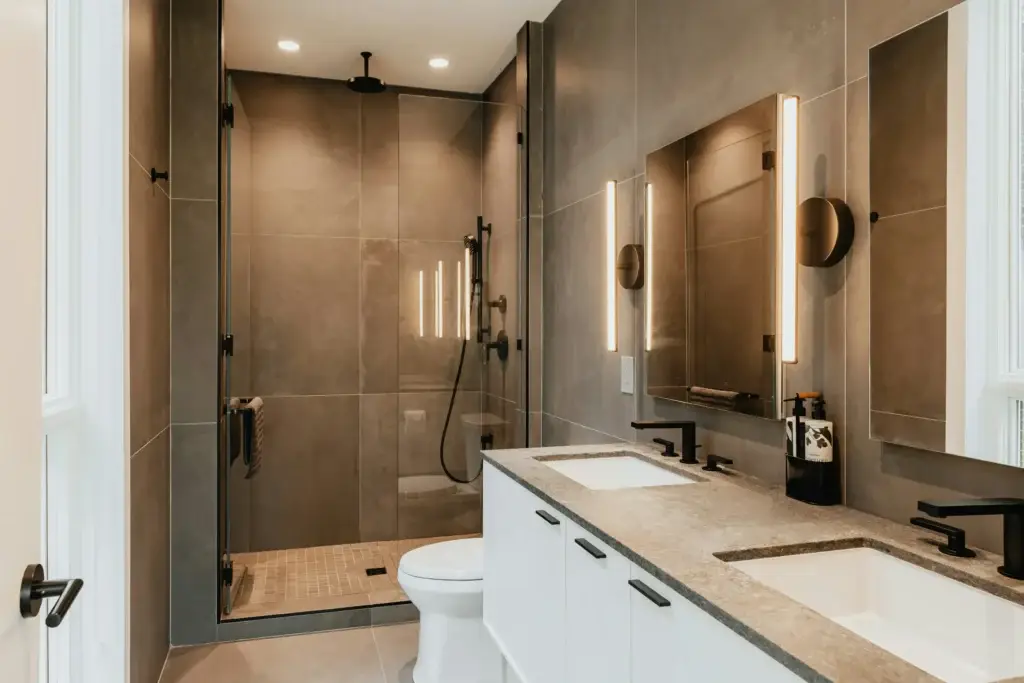
Stepping out of a hot shower on a chilly morning creates a massive amount of steam. In older Washington homes, that heavy moisture eventually damages drywall and can contribute to rot in the subfloor beneath a leaking or poorly waterproofed floor. Property owners often discover this hidden water damage right when they decide to update an outdated layout. Planning a successful Puyallup bathroom remodel requires focusing first on what happens behind the walls before picking out new fixtures.
What Bathroom Remodeling Upgrades Prevent Rot and Mold?
Contractors reduce the risk of rot and mold in remodeled bathrooms by upgrading to cementitious backer boards, continuous waterproofing membranes, and properly sized exhaust fan systems behind the shower tile.
Water always finds the weakest point in a room. Slapping new porcelain over failing drywall invites tile failure and hidden moisture damage. A lasting wet-room environment relies on strict material sequencing to control water before it reaches the framing.
Hidden Moisture Prevention Safeguards
Proper moisture management relies on building a watertight envelope. These four specific defenses help keep the underlying framing dry.
- Waterproof or Uncoupling Subfloor Membrane: When approved and properly sealed, this layer helps protect the subfloor and isolates tile from minor substrate movement.
- Cement Backer Board: This moisture-resistant substrate does not rot like gypsum or wood, but it still requires a compatible waterproofing system.
- Waterproof Membrane: Painting or rolling a continuous liquid membrane directly over the cement board helps keep liquid water out of the wall cavity.
- High-CFM Ventilation: Properly sized exhaust routed outdoors removes winter steam and reduces condensation on cold surfaces.
The Reality of a Master Bath Renovation
Many older bathrooms rely on water-resistant drywall in the shower enclosure. Builders used this inexpensive material to save money during original construction. The problem becomes obvious during a modern tear-out. Once the paper backing stays wet, the gypsum can deteriorate and the tile bond may fail.
A proper master bath renovation strips wet zones down to the bare studs. Installers must carefully evaluate the wood framing for existing rot before building the new shower walls. Skipping this inspection can leave moisture damage or mold inside the newly sealed cavities. Upgrading to properly installed cement board provides a stable substrate for a durable tile installation.
Custom tile showers also require a properly sloped floor pan. If the mortar bed lacks the correct pitch, water sits on the floor instead of draining away quickly. Standing water eventually damages grout lines and can seep into the subfloor. A skilled installer carefully integrates the waterproofing membrane with the drain assembly to greatly reduce the risk of a slow leak.
Managing Winter Steam During Bathroom Remodeling
Washington winters often lead people to take hotter, longer showers. When that trapped steam reaches a surface below the room’s dew point, it can condense into liquid water. An undersized or poorly ducted fan may not remove enough moisture to dry the room quickly. That lingering moisture can damage ceiling paint and warp wood baseboards.
Professional bathroom remodeling requires sizing the exhaust fan according to the room, fixtures, ductwork, and applicable code. A properly sized unit removes humid air and helps limit moisture damage. Installers must also verify that the ductwork vents completely through the roof or an approved exterior wall termination. Venting a bathroom fan into a cold attic deposits moisture above the ceiling and can create condensation and mold problems.
Smart mechanical upgrades also include installing moisture-sensing switches for the exhaust fan. Most people turn the fan off the exact second they leave the room. A humidity-sensing switch keeps the fan running automatically until humidity falls to the selected control level. This simple hardware upgrade removes much of the human error from daily moisture control.
Related Articles:
- Fixing Cold and Damp Bathrooms With Tacoma Remodeling
- How Pro Bathroom Remodeling Protects Tacoma Homes From Mold
Build a Waterproof Space That Lasts
Upgrading your shower means nothing if the underlying structure cannot handle daily water exposure. Relying on outdated building methods leaves your framing vulnerable to severe rot. You need a contracting crew that prioritizes total waterproofing and proper ventilation before laying a single piece of tile. Fixing the structural elements first ensures your investment actually survives heavy daily use.
Top Rung Construction builds durable, waterproof spaces using modern building science and precise material sequencing. We handle the essential floor membranes, solid cement backing, and heavy-duty ventilation required for wet environments.
Let us help you build a secure and mold-resistant space. Reach out today to schedule your Puyallup bathroom remodel or discuss a project anywhere across Pierce County.